Saturday, November 23, 2013
Tow #10: Article: "School District's Right to Divert Kids From Life of Crime"
This editorial was written in the opinion section of the Miami Herald. It tackled the subject of zero tolerance policies in public schools. The Miami Herald Editorial Board wanted to inform residents of the state of Florida about the changes to the policies in Miami-Dade and Broward County in order to hopefully create change in the rest of the state of Florida. The Miami Herald believed that by having zero tolerance policies in place, it would end up leading children into a life of crime. Prior to 2009, the Florida Legislators took a zero tolerance approach to all schools. For example, if a student threw a spitball, threw a punch, or cursed at a teacher, the school would have to call the cops. One bad decision led to a police record, making it harder for that student to get a job, a loan, or go into the military. According to the Miami Herald, if troubled students received counseling or mentoring, they would eventually learn to stay away from a life of crime. However, I disagree with the article. The Miami Herald mostly just used facts and statistics to prove their point, so I do not think it was very convincing. According to the article, Miami-Dade County and Broward County have had 30% less arrests and suspensions in their schools today due to the change in policy in 2009. However, does that fact even matter? Of course there are going to be less arrests and suspensions when the main form of punishment is counseling. Also, many of the teenagers that make minor mistakes will probably make major ones too if they do not get seriously punished. If the counterargument had been addressed and refuted more, I think that the article would have been much more effective. Before reading this article, I did not think that schools should relieve some of the zero tolerance policies, and after reading my opinion has not changed. Therefore, I do not think that the Miami Herald achieved their purpose.

Sunday, November 17, 2013
Tow #9: Visual Text: Volkswagen's Amarok Print Ad

The advertisement above is from Volkswagen is advertising the fact that with one tank of gas, their car can go 620 miles. The car that they are advertising specifically in this print ad is a Volkswagen Amarok. Volkswagen is a well known car company that has been selling many cars for many years which makes them a credible company and therefore appeals to ethos. I think this ad is effective because there is a strong appeal to logos. With the fact at the bottom of the picture, it shows the logical reason for buying the car. I also like this advertisement because of its simplicity. When flipping through a magazine, there are so many colors and words that when an ad is plain grey with little words, it will make the reader stop for a second and look at the ad. In that second it is easy to understand exactly what the ad is saying because of the picture. It is clever to reshape the key into nature landscape because is illustrates that by unlocking your car, you are unlocking the ability to go on a long adventure. Then the reader will look at the bottom of the page and see that the long adventure can go on for 620 miles. The advertisement also has an appeal to pathos for anyone that loves adventure. The word adventure symbolizes a new beginning and a change that is fun. It symbolizes trying something new and enjoying it. The word had a strong positive connotation that sparks memories of someone’s own adventures or the excitement of starting a new adventure. Volkswagen seemed to be specifically targeting people that need a new car and like to go on long drives often. I think that Volkswagen successfully achieved their purpose of selling this car. The simplicity and cleverness of this ad is refreshing and hopefully it got the attention of car buyers.
IRB Introduction #2: Stiff by Mary Roach
For the second marking period I am reading Stiff: The Curious Lives of Human Cadavers by Mary Roach. I chose to read this because I was looking through a list of some of the best nonfiction books ever written and I recognized the title. My English teacher last year read a section of it to us and she recommended that we all read it. It is a book about dead bodies and what scientists do with them when those people chose to donate their bodies. Apparently it is humorous even though the book involves death, so I was curious and decided to read it. Hopefully I will learn from this book about how people can be useful even after they are dead.
Tuesday, November 5, 2013
Tow #8 IRB: The Buried Book by David Damrosch (Part 2)
The second half of my independent reading book, The Buried Book by David Damrosch, was centered more around how the Epic of Gilgamesh was found by Hormuzd Rassam and the effect the text had on the world. The part of the book that I found most engaging was how the cuneiform tablets that the epic was written on were found. Rassam was an English citizen that was a victim of harsh racism. Because of this, Rassam recieved little credit for his discoveries and his career became a joke. The purpose of Damrosch including Rassam's story in The Buried Book was to clear Rassam's name and explain to people interested in history and literature about the truth of how the tablets were found. Damrosch, a literature professor at Harvard University, had to do an extensive amount of research in order to clear Rassam's name. I think that Damrosch achieves this purpose more effectively than some of his others throughout the book because this side story is the first one he tells that appeals to pathos. For example after "Rassam had made the discovery of his life" the British press and the British museum "increasingly failed to give him credit for his finds." By using the word "failed" it created a negative emotional reaction because the word fail has such a negative connotation. Also the fact that the word "failed" is preceded by "increasingly" shows that he didn't get credit for his work multiple times. This part of the book was effective because many people can relate to Rassam's story. Because of a negative reputation, someone may discover something amazing, but all the credit is given to someone else. In Rassam's case, his negative reputation wasn't even his fault. Ernest Alfred Thompson Wallis Budge, an upperclass collector that worked with the British Museum and a rival of Rassam, received most of the credit for the work that Rassam had done. Because of this Rassam was "long forgotten by everyone" until Damrosch wrote this book to achieve his purpose of recognizing Rassam's discovery of the tablets.
Sunday, October 27, 2013
Tow #7: Article: "No to More Casinos in New York State" by The Editorial Board of The New York Times
The Editorial Board of the New York Times consists of nineteen people that write opinion pieces that reflect the views of the editor and publisher of The New York Times. "No to More Casinos in New York State" was clearly written because The New York Times is against adding seven more casinos throughout the state of New York. The purpose of this article was to convince voters to say no to the idea when they vote on November 5th. The Editorial Board uses statistics, data from credible sources, and examples of failed casinos in other states to convince New York citizens to vote no. I think that The New York Times will successfully achieve their purpose because they appeal to logos throughout the entire article. They use Atlantic City as an example of how casinos will be a negative addition to the state. According to a report form the Center for Gambling Research, in Atlantic City, "the unemployment rate is at about 18 percent, and the crime rate is almost three times that of the surrounding country." This statistic in the article is one of many that was taken from a credible source that showed how a city is negatively affected by casinos. The Editorial Board also refutes many counterarguments from the governor of New York, Andrew Cuomo. They said that there is no doubt that some of the cities in New York need an economic boost, but there are other more successful ways to do it. By including this argument, the article further appealed to logos therefore strengthening the argument. Although the argument was mainly logical, there were some choice words the Editorial Board used to generate an emotional response. For example, the topic sentence of the fifth paragraph states that "when the gambling revenues begin to shrink, taxpayers lose." The word "lose" has a strong negative connotation and appeals to pathos. The New York Times is basically saying that no one wants to be a loser, so why vote to lose. It is clear exactly what the New York Times was arguing and there was a lot of irrefutable evidence to support their claim, therefore I think they will ultimately achieve their purpose.
Thursday, October 17, 2013
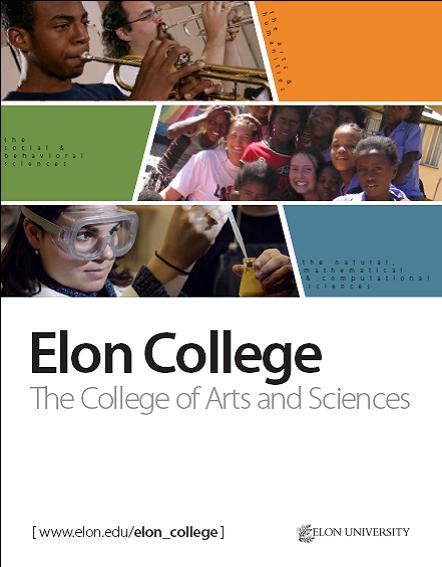
Tow #6: Visual Text: College Recruiting Pamplets
Sunday, October 13, 2013
Tow #5: Article: "One Possible Future for Movies: Projecting Them in 270 Degrees" by Leslie Finlay
 |
| ScreenX 270 degree experience |
Leslie Finlay, a woman from New York who now lives in South Korea, wrote "One Possible Future for Movies" for The Atlantic to inform American movie-goers about a new technology developing in South Korea. This technology is called ScreenX. ScreenX display allows the audience to be fully immersed in a 270 degree motion picture in order to create the effect that the members of the audience are actually in each scene. As shown in the picture above, there are three screens to create this 270 degree effect: the traditional one in the front, and a screen on the left and right sides. Finlay truly believes that ScreenX could be the future of movies and was informing movie fans of this possibility. However, I love movies and I completely disagree with Finlay. ScreenX has no chance of being the future of movies because 3-D and IMAX movies are novelties that have yet to completely replace traditional movies. ScreenX seems like just another novelty that a person will enjoy once, but then never watch again. Finlay attempts to show that ScreenX is a possible future for movies by using quotes from the director of the first ScreenX movie and audience members' reactions after viewing the movie. Also Finlay appeals to logos by addressing the counterargument that ScreenX is better than traditional movies and IMAX. However, Finlay was not smart to mention that the director said the movie was a nightmare to film and that it was hard for the crew members to stay out of the 270 degree camera's way. If the director struggled to make this movie, which was only a half hour long, how hard will it be to film a full length film? I believe that Finlay was ineffective in achieving her purpose, mostly because she failed to refute all counterarguments. She never once mentioned the idea of buying a movie and watching it at home. How would a person be able to watch a movie with three screens at home? She does not answer this question and many others in her article. Overall, I agree with Finlay that Hollywood will try to incorporate this technology soon, but I, a frequent movie-goer, am not convinced that ScreenX is even a possible future for movies. Based on the comments listed below the article, I'd say that most movie-goers agree with me.
Subscribe to:
Comments (Atom)