Sunday, October 27, 2013
Tow #7: Article: "No to More Casinos in New York State" by The Editorial Board of The New York Times
The Editorial Board of the New York Times consists of nineteen people that write opinion pieces that reflect the views of the editor and publisher of The New York Times. "No to More Casinos in New York State" was clearly written because The New York Times is against adding seven more casinos throughout the state of New York. The purpose of this article was to convince voters to say no to the idea when they vote on November 5th. The Editorial Board uses statistics, data from credible sources, and examples of failed casinos in other states to convince New York citizens to vote no. I think that The New York Times will successfully achieve their purpose because they appeal to logos throughout the entire article. They use Atlantic City as an example of how casinos will be a negative addition to the state. According to a report form the Center for Gambling Research, in Atlantic City, "the unemployment rate is at about 18 percent, and the crime rate is almost three times that of the surrounding country." This statistic in the article is one of many that was taken from a credible source that showed how a city is negatively affected by casinos. The Editorial Board also refutes many counterarguments from the governor of New York, Andrew Cuomo. They said that there is no doubt that some of the cities in New York need an economic boost, but there are other more successful ways to do it. By including this argument, the article further appealed to logos therefore strengthening the argument. Although the argument was mainly logical, there were some choice words the Editorial Board used to generate an emotional response. For example, the topic sentence of the fifth paragraph states that "when the gambling revenues begin to shrink, taxpayers lose." The word "lose" has a strong negative connotation and appeals to pathos. The New York Times is basically saying that no one wants to be a loser, so why vote to lose. It is clear exactly what the New York Times was arguing and there was a lot of irrefutable evidence to support their claim, therefore I think they will ultimately achieve their purpose.

Thursday, October 17, 2013
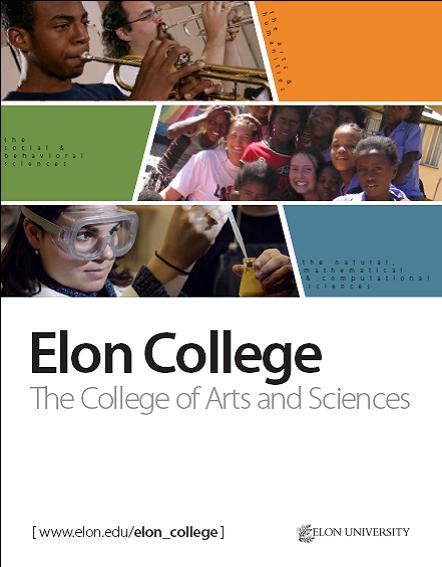
Tow #6: Visual Text: College Recruiting Pamplets
Sunday, October 13, 2013
Tow #5: Article: "One Possible Future for Movies: Projecting Them in 270 Degrees" by Leslie Finlay
 |
| ScreenX 270 degree experience |
Leslie Finlay, a woman from New York who now lives in South Korea, wrote "One Possible Future for Movies" for The Atlantic to inform American movie-goers about a new technology developing in South Korea. This technology is called ScreenX. ScreenX display allows the audience to be fully immersed in a 270 degree motion picture in order to create the effect that the members of the audience are actually in each scene. As shown in the picture above, there are three screens to create this 270 degree effect: the traditional one in the front, and a screen on the left and right sides. Finlay truly believes that ScreenX could be the future of movies and was informing movie fans of this possibility. However, I love movies and I completely disagree with Finlay. ScreenX has no chance of being the future of movies because 3-D and IMAX movies are novelties that have yet to completely replace traditional movies. ScreenX seems like just another novelty that a person will enjoy once, but then never watch again. Finlay attempts to show that ScreenX is a possible future for movies by using quotes from the director of the first ScreenX movie and audience members' reactions after viewing the movie. Also Finlay appeals to logos by addressing the counterargument that ScreenX is better than traditional movies and IMAX. However, Finlay was not smart to mention that the director said the movie was a nightmare to film and that it was hard for the crew members to stay out of the 270 degree camera's way. If the director struggled to make this movie, which was only a half hour long, how hard will it be to film a full length film? I believe that Finlay was ineffective in achieving her purpose, mostly because she failed to refute all counterarguments. She never once mentioned the idea of buying a movie and watching it at home. How would a person be able to watch a movie with three screens at home? She does not answer this question and many others in her article. Overall, I agree with Finlay that Hollywood will try to incorporate this technology soon, but I, a frequent movie-goer, am not convinced that ScreenX is even a possible future for movies. Based on the comments listed below the article, I'd say that most movie-goers agree with me.
Saturday, October 5, 2013
Tow #4 IRB: The Buried Book by David Damrosch (Part 1)
For my independent reading book, I chose to read The Buried Book written by David Damrosch, a professor that has his Ph.D from Yale University and currently teaches Comparative Literature at Harvard University. Damrosch did an extensive amount of research on the people that discovered and deciphered the Epic of Gilgamesh and so he decided to write this narrative. Among those people were George Smith and Hormuzed Rassam, which were the two men that were most emphasized and seemingly the most important people part of this discovery. It is obvious that Damrosch was writing for an intelligent audience of college students or professors because of his informative, almost robotic, tone. Also the structure of the book so far has been starting from the end, the discovery of the two thousand year-old cuneiform tablets in the 1800s, and getting closer to details about the time period when the Epic of Gilgamesh was written. Because of this structure and the sophisticated language Damrosch uses, that indicates the audience was not someone looking for a bit of light reading. So far I think that Damrosch has been effective in informing his audience about this piece of history. Although it seems like a history textbook at times, it is effective because there is no "fluff" to make it more fun to read, but instead all of the information is either straightforward and relevant or it seems like it will be important at the end of the book. However, to keep readers interested, Damrosch tells relatively extensive side-stories about the key players in this discovery. For example, with George Smith, Damrosch informs his audience of how Smith was able to translate the cuneiform tablets that the Epic was written on over the course of fifteen years, and the fame he gained after the public found out he was translating the dead language. Rather than leaving it at that, Damrosch goes deeper and provides background information on Smith's wife and letters he sent to his wife before he tragically died. I predict that after I read the last half of the book, Damrosch will tie in every main story and side story he tells to reduce confusion and hopefully achieve his purpose to compile all of his research and retell the story of the rediscovery of Gilgamesh.
Sunday, September 29, 2013
Tow #3: Article: "The Case Against High School Sports" by Amanda Ripley
Amanda Ripley, the author of The Smartest Kids in the World- and How They Got That Way, wrote "The Case Against High School Sports" for The Atlantic because she firmly believes that high school sports are ruining academic opportunities for students. She establishes her credibility by stating that she played and enjoyed sports throughout her high school experience and it is evident that she did an extensive amount of research before writing this article. However, I do not think she will successfully achieve her purpose of convincing American principals and school districts and to ban sports, especially football, in their schools. In the article, Ripley makes the argument that schools are spending too much money paying for their football teams and coaches. Also she uses many examples to strengthen this argument. There is a school district in Texas that would have had to close down completely if they hadn't gotten rid of all sports. I agree with Ripley in the sense that too much money is being spent on sports, but getting rid of sports in high schools across the country is a bit extreme. There needs to be a balance in the amount of money that goes towards sports and academics. Rather than giving a football team new uniforms and spending a fortune on artificial turf in the same year, the school could pay for one of those things in that year and spend the rest of the money on buying new books or hiring better math teachers that may not double as coaches. I do not think it was smart for Ripley to mention that in the school in Texas, many sports were put back into their school, such as tennis, track, basketball, and cross country. I believe the sports were put back in because it is part of American culture to have sports in our schools. Ripley also makes the argument that American schools are not testing in math as Korea, China or Finland. She uses statistics that are difficult to argue with such as the fact that 93 percent of South Korean students graduate high school as opposed to 77 percent of American students. However I do not believe that these numbers are directly related to sports. Also, 77 percent of our high school population is still a lot of people considering the size of the country, so why does it matter if there are a few bad apples. They made the choice to not go to college because they have the right to live life how they want to. Overall I do not believe that Ripley accomplished her purpose in writing the article because America is still producing enough intelligent, innovative minds that there is no need to take extreme measures to change anything.
Wednesday, September 18, 2013
Tow #2: Visual Text: Global Warming Deniers by Nick Anderson

Sunday, September 15, 2013
Tow #1: Article: "A Young Gymnast's Body Is Mysteriously Transformed" by Lisa Sanders, M.D.
Lisa Sanders is a professor at Yale School of Medicine and has been writing a column called Diagnosis for the New York Times since 2002. In this column, she writes about people with a serious illness that is difficult to be solved. In this article, she wrote about a fifteen year-old gymnast whose body suddenly changed. Overnight, her stomach protruded to the size of a woman who is six months pregnant, preventing her from doing gymnastics. The young girl saw many doctors, but all of them couldn't figure out what was wrong with her. Some even said that it was all in her head and put the gymnast on antidepressants. That was the part of the article that bothered me the most. When it comes to children and teenagers, many adults dismiss what they are saying and assume it is a lie. Sanders, a former doctor, felt ashamed that other doctors would think the gymnast was lying, so she included that moment in her article. When the gymnast was in her worst pain, she begged the doctor, "cut me open and take it all out" because "anything is better than this." Sanders included this quote in her article to appeal to pathos and hopefully make parents feel sympathy towards this child. The reason why Sanders wrote about this case was not only to inform people about this rare disease, but also to encourage parents to believe their child when they say they are in pain or sick and to never give up on finding a diagnosis. Eventually a gastroenterologist named Rayna Gothe figured out that the involuntary muscles in her digestive system were uncoordinated and working incorrectly. The gymnast was able to return to gymnastics after a few weeks of physical therapy. By adding this happy ending to the story, I think that Sanders achieved her purpose. She showed that even some of the most difficult cases can still be solved and cured, so a person should never give up.
Subscribe to:
Comments (Atom)